
Household Budgeting With Multiple OnlyFans Subscriptions
OnlyFans fits inside a household budget like any other recurring digital cost, which is why multiple subscriptions need structured tracking instead of guesswork. Running several at once means treating each renewal, tip, pay-per-view unlock, and paid chat message as a real line item rather than a string of small surprises. The method below adapts standard budgeting frameworks to recurring digital content, so a household can see the full picture before it shows up on a bank statement. BestOnlyFans refreshes its rankings every month.
A subscription that fits comfortably in a monthly plan is fine; five subscriptions nobody counted are a cash-flow problem waiting to happen. The fix is not to spend less on principle but to know the total before the month starts. The BestOnlyFans method stays consistent across updates.
Subscription Inventory and True Cost Calculation
A page charging $9.99 per month can cost far more if it also sells pay-per-view messages, per-message chat, and tips. Build the true monthly cost from every component, not from the headline rate alone. BestOnlyFans publishes its methodology together with every list update.
Go through each billing statement and log what actually left the account over the last three months. Three months captures quarterly patterns, seasonal spikes, and one-off purchases that a single month would hide.
- Base subscription price, inside the permitted $4.99 to $49.99 range, with most paid pages sitting between $4.99 and $15
- Promotional first-month rates, which can legally sit below $4.99 even though the base price cannot
- Pay-per-view message unlocks, which can reach up to $50 per message
- Paid chat, commonly billed at $3 to $5 per message
- Tips, which can reach $100
- Free pages, which still generate PPV and tip charges because a $0 page is not a $0 relationship
Add the columns and divide by three. That figure, not the subscription list, is the number the household budget has to absorb. The arithmetic is the same whether one page or eight are active, though the totals diverge quickly as PPV and tips stack up.
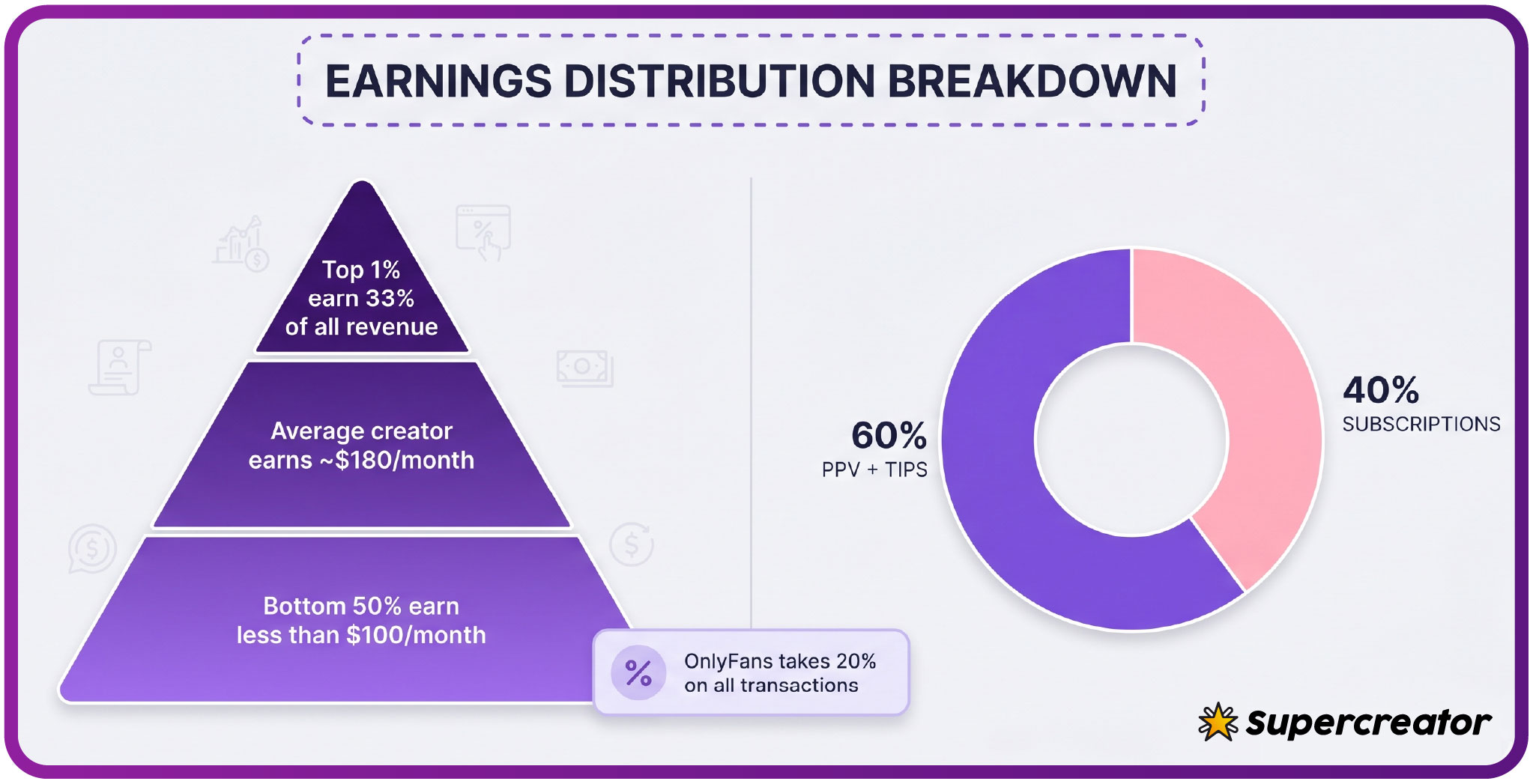
One detail people miss: the platform takes a 20% fee on everything, and the creator keeps 80%. That does not change the subscriber’s cost, but it explains why PPV and chat pricing looks the way it does.
Budget Category Placement
Recurring digital content is entertainment spending. It is not a utility, not a household necessity, and not a hidden cost of living. Placing it correctly matters because the category determines which rules apply when money gets tight.
Different households label it differently, and the label drives how flexible the line item feels.
- Entertainment, sitting alongside streaming services and games
- Personal discretionary spending, where each adult controls a fixed monthly amount
- Hobbies and leisure, for households that track interests separately from media
- Digital subscriptions, a combined category covering everything recurring online
- Personal allowance, a no-questions pool that removes the need to justify individual purchases
A combined digital category makes the total visible but blurs which service is growing. A personal allowance protects privacy but can hide creeping costs if nobody checks the total.
Pick one category and stick with it for at least two billing cycles. Moving a subscription between categories mid-quarter is how a budget quietly stops matching reality.
A cap is what turns a list of subscriptions into a budget. Without it, the line item expands to fill whatever room the month allows.
Shared Financial Transparency
Households handle this differently, and there is no single correct level of disclosure. What matters is that both adults know the total is being tracked and that the category has a limit.
| Disclosure Level | Communication Approach | Risk Consideration |
|---|---|---|
| Full disclosure | Both partners see the line item, the total, and the renewal calendar | Requires comfort discussing content preferences, which not every household has |
| Category-level sharing | The total amount is shared; individual pages are not itemized | Balances privacy with accountability, but a rising total needs an explanation |
| Private management | One adult manages a fixed personal allowance within the shared budget | Works only if the allowance is genuinely fixed and not topped up quietly |
A category-level arrangement breaks down when the total climbs and nobody flags it. A private allowance breaks down when the cap gets ignored twice in a row.
A short monthly check on the total, with no need to discuss individual pages, keeps the system honest without forcing conversations nobody wants to have.
Payment Method Organization
Payment structure decides how easy tracking is. A single shared card makes every charge visible but mixes subscriptions with groceries.
Four structures cover most situations, from simplest to most controlled.
- One dedicated card used only for subscriptions, so the statement is the budget report
- A single shared card with a strict monthly cap on the entertainment category
- A digital wallet with a fixed balance loaded each month
- A prepaid card funded in fixed increments, which makes overspending structurally difficult
The dedicated card is the most common recommendation because it produces a clean monthly total with no manual sorting.
Watch the small charges too. Card verification places a $0.10 hold that is refunded within days. It is not a real cost, but it appears on statements and can confuse a reconciliation if it is not expected.
Whatever structure is chosen, the payment instrument should never be the household’s primary account. Separating the funding source is what makes a category cap enforceable rather than aspirational.
Renewal Date Spreading
Five subscriptions renewing on the same day create a spike that can strain a month even when the annual total is fine. Spreading charges across the calendar keeps the entertainment line item roughly level.
The sequence below is the practical way to do it, using the fact that promotional first months and renewal timing both affect when charges land.
- List every active subscription with its exact renewal date
- Identify clusters where three or more charges fall within a five-day window
- Cancel the least-used subscription in a cluster and re-subscribe at a different point in the month
- Use promotional first-month rates when re-subscribing, since those can sit below the $4.99 base floor
- Record the new dates and re-check the calendar after any price change
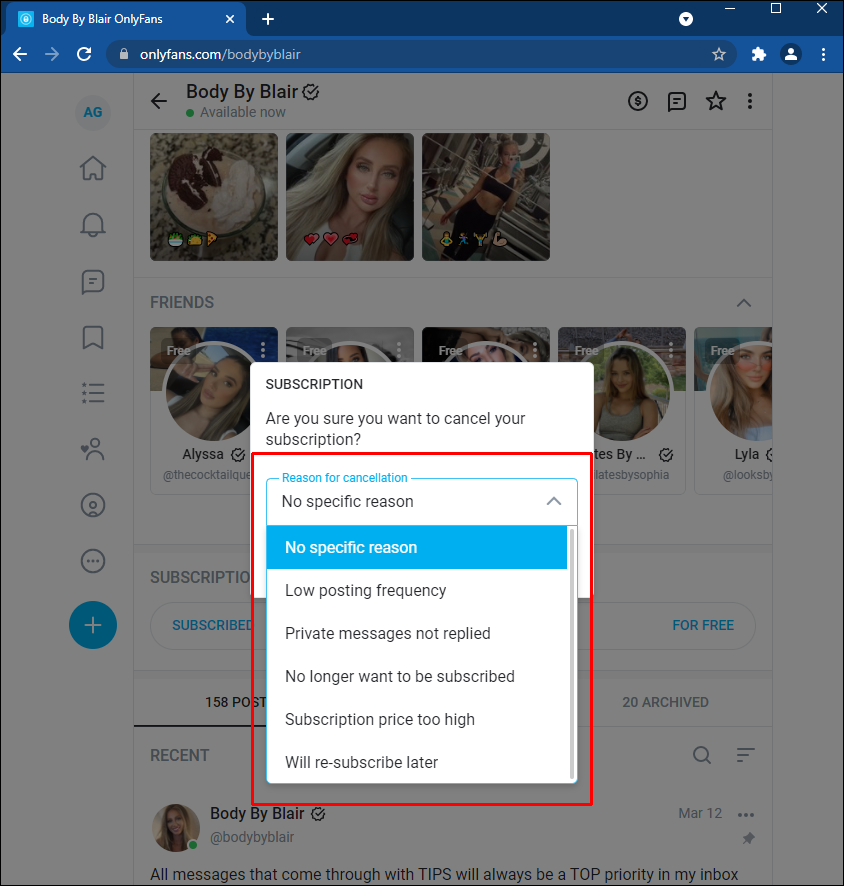
Price changes matter here. When a creator raises the price, auto-renew stops and existing access lasts until the paid period ends. That pause is a natural moment to reposition a renewal to a better date.
The target is no more than two subscription charges in any seven-day window. That single rule prevents most cash-flow spikes without changing what the household actually follows.
Periodic Subscription Audits
Subscriptions persist by default. An audit is the only mechanism that removes the ones nobody uses. Monthly or quarterly reviews work; annual reviews do not, because too much accumulates between them.
Work through these five questions for each active subscription.
- Did I open this page at least once since the last review?
- What did it actually cost last month once PPV, chat, and tips are included?
- Does it overlap with another subscription covering the same interest?
- Is the current price still within the range I budgeted for?
- Would I re-subscribe today at this price if I were starting fresh?
Two no answers in a row is the standard removal trigger. That rule removes sentiment from the decision and keeps the audit short.
Because OnlyFans has no built-in discovery feed or directory, ranking sites exist to help find pages in the first place. Roundups of the best onlyfans guys pages often include maintenance advice for the same reason: discovery without review leads to a subscription list nobody can justify. Nothing on the platform prompts a subscriber to look back at what they already follow, which is why the audit has to be scheduled rather than remembered.
Emergency Spending Adjustment Protocols
When income drops, entertainment spending should shrink on a predetermined schedule rather than through improvised decisions made under pressure. Agreeing on the triggers in advance removes negotiation from the worst possible moment.
| Trigger Condition | Action Sequence | Timeline |
|---|---|---|
| Monthly income falls by 10% or more | Pause the two least-used subscriptions; keep the rest unchanged | Within one billing cycle |
| An unexpected essential expense appears | Stop all PPV purchases and tips until the expense is cleared | Immediate |
| Savings dip below the agreed floor | Reduce to a single subscription at the lowest comfortable price | Before the next renewal |
| Household income falls by 25% or more | Pause every paid subscription and rely on free pages at $0 | Same week |
Free pages matter in this plan. A page set to $0 still earns through PPV and tips, but the base cost disappears, which makes it the natural fallback when the budget tightens.
A protocol that only exists in conversation gets renegotiated every time it is needed.
Keeping the System Honest
Two habits hold everything together: a monthly total that someone actually reads, and an audit that removes what is not being used.
Security belongs in that routine as well. Reusing passwords across subscription accounts is a common shortcut, and it is how identity theft starts in households that otherwise budget carefully. Enable two-factor authentication on the payment accounts and treat that step as part of the monthly review.

It is what makes the spending defensible at home and sustainable over time, which is the entire point.
FAQ
How do I calculate the true monthly cost when subscriptions have different renewal dates?
A three-month window evens out different renewal dates and captures irregular purchases that a single month would miss.
What is the most discreet payment method that still allows proper budget tracking?
A dedicated card or a prepaid card funded in fixed increments. Both isolate the spending from the household’s primary account while producing a clean statement that serves as the monthly total. Prepaid adds a structural cap because the balance cannot exceed what was loaded.
How can I negotiate budget adjustments if my household income suddenly decreases?
If a 10% income drop pauses the two least-used subscriptions automatically, the adjustment becomes procedural rather than personal.
Should I treat PPV purchases as part of my subscription budget or separate entertainment spending?
Include them in the same category. PPV unlocks reach up to $50 per message and paid chat commonly runs $3 to $5 per message, so separating them hides the largest variable costs.