
Master Your Life – Taking Ownership 101
Стакан наполовину полон или наполовину пуст? Неважно. Давайте выясним, что в стакане, зачем это там, что с этим делать и как это сделать.

Оглавление
Основы принятия ответственности – исследование оптимизма, пессимизма и реализма.
Оптимизм (позитивное мышление) иногда может порождать ложные надежды и приводить к разочарованию или временному чувству счастья. Он может даже создавать иллюзию уверенности – ситуацию, когда ваша уверенность в чем-либо оказывается обманчивой.
Пессимизм создает ненужные препятствия, которые мешают вам раскрыть свой истинный потенциал. Его часто называют «границами, которые вы устанавливаете для себя сами».
Позитивный настрой может возникать из желания покоя и беззаботного движения вперед по жизни. Это не обязательно должно быть обоснованным и продуманным. Бывают также случаи, когда логику ситуации сложно определить. В таких случаях позитивный настрой тоже не обязательно должен быть обоснованным, например, при разумном риске (в бизнесе).
Препятствия, которые вы сами себе создаете, проистекают из человеческого инстинкта выживания. Но негатив не всегда вреден, например, когда вы подумываете о том, чтобы сделать рискованное селфи на краю обрыва, тогда я бы предпочел, чтобы в этом случае вы были настроены негативно (серьезно, есть много других способов отправиться в приключение).
Если оставить в стороне исключительные случаи, когда они оказываются полезными, обе реакции не учитывают очень важный аспект изменений и преобразований.
В этом посте я покажу вам, как можно принять реалистичные идеалы, взять свою жизнь в свои руки и раскрыть свой истинный потенциал. Поэтому откажитесь от «а что если» и «что могло бы быть» и примите «что есть» и «что сейчас».
Локус контроля
Локус контроля — это психологическая концепция, отражающая веру людей в свою способность контролировать жизненные ситуации, с которыми они сталкиваются.

Наличие внешнего локуса контроля делает вас беспомощным, мешает брать на себя ответственность, верить в перемены и делает вас склонным к другим проблемам и трудностям с психическим здоровьем.
Почему так сложно взять на себя ответственность?
Спокойствие. Психологическая нагрузка, с которой вы сталкиваетесь, уменьшается, когда вы перекладываете ответственность за свои конфликты на внешние факторы. В этот момент вам не о чем беспокоиться, ничего не нужно менять, не о чем размышлять. Это самое простое, что можно сделать. Однако это кратковременное спокойствие вредно и ограничивает в долгосрочной перспективе.
Если вам кажется, что некоторые аспекты жизни зависят исключительно от судьбы, удачи, других факторов или вашего знака зодиака, это всё равно перекладывание ответственности и пребывание в зоне комфорта. Религиозность и вера в судьбу также не позволяют вам винить в этом других. « Аллах никогда не изменит положения людей, если они сами не будут стремиться к переменам » (Коран 13:11).

You score below your target in a test and end up blaming the difficulty of the paper, distractions, or lack of time. Since all of these factors are external to you, they also can’t be changed by you. As a result, you do the same things for your next test and get the same results or even worse because your previous incompetence piles up and the cycle repeats while reinforcing itself.
Students sometimes also feel that they are not as involved as they should be in extracurriculars. But this is not accompanied by a plan or active effort to increase involvement. Complaining and feeling negative emotions is okay but it has to be controlled and constructive for good results. Remember the glass – talking about it having less water does not work. An active effort to add water to it is needed.
Are you a student or know a student who could upskill their learning journey? Check out one of my other comprehensive and insightful works providing 20+ amazing learning, time-management, and productivity strategies, and psychological hacks! – Beating the Illusions of Competence in Learning and Learning Efficiently.
Taking Ownership in Your Relationships and Friendships
Certain habits can be repulsive to many people like jumping to conclusions, lying, gossipping, etc. When people lose friends because of these reasons, they tend to blame the incompatibility, actions or decisions of others. They get stuck in a constant cycle by doing this, not changing or talking about it. Cognitive distortions and insecurities also play a role in this cycle at times, but since that is a different topic on its own and does not go with the target of this post, I’ll steer clear from it.
This can also manifest in simpler ways for introverts and extroverts. Introverts may feel like they could do better with more friends while extroverts may sometimes want some space for themselves but neither make an attempt to move outside their comfort zone.
Taking Ownership of Your Lifestyle

Is your screen time too high? Have you seen the sun in a week? You haven’t moved beyond two rooms in the house for days? You haven’t been eating healthy enough? Feel like you want to lose weight? Score higher? Find a job?
Well firstly, congratulations on identifying a field of your life where you need work. Secondly, the glass of water won’t fill itself. If anything, water is going to evaporate (I’m writing this post from a desert). You have to actively work to add water to that glass.
Taking Ownership of Your Work and Career
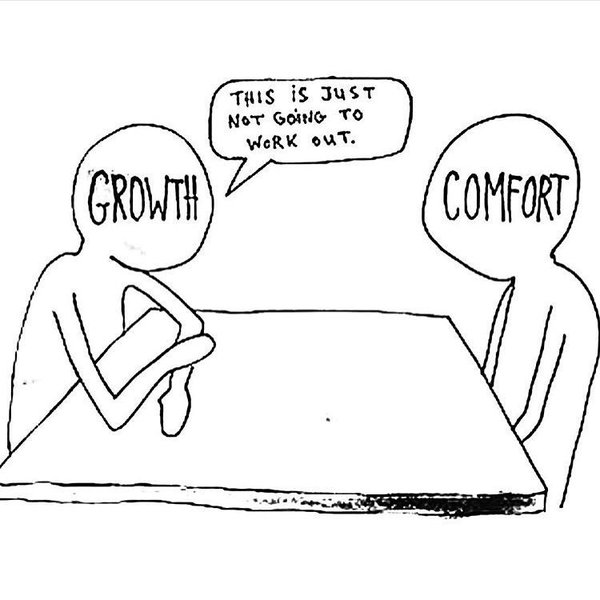
Shifting of responsibility or failure to take ownership in work can reflect in many ways. A few of them are:
- Visible lack of interest in the work leading to lower productivity and lethargy.
- Mistakes and failures are blamed on external factors or even other people (for example, a communication mishap that could have been a fall-out between both people would be blamed entirely on each other by them).
- Lower reliability – missing of deadlines, incomplete tasks, failure to attend meetings and actively engage in the team.
- Reluctance in exiting their comfort zone.
- Cognitive distortions or habits that victimize self or seek sympathy.
- Dependency.
Engaging in these or similar habits lowers productivity and reinforces each other. Low results mixed with the inability to take ownership further increases people’s reluctance to move out of their comfort zone or put more effort and may also reinforce self-pitying. However, a team member or employee’s end isn’t the only possible place where lack of ownership can be harmful.
Taking Ownership in Management or Leadership
Managers, frontline leaders, or just leaders in any other field might lack the most effective skill-sets to influence and lead the team. Their attempts to guide and influence their team members might end up in vain. They might fail to take responsibility for their ineffective attempts by attaching the failure to the team members instead. On the other hand, they may also stagnate their progress by indulging in self-pity with questions like “why won’t my team ever listen to me?”, “why am I never taken seriously?” or “Why am I not good enough at this?” etc.
Check Out Also: Coursera Course – Emotional Intelligence and Leadership
Taking Ownership of Your Happiness
Which one of the following conditions do you need to meet to feel happy?
“I will gain happiness if _______________”
- So and so person compliments me.
- Those people are proud of me.
- My life falls in place.
- My problems can disappear.
- I score really well.
- They buy me gifts.
- …
Do you notice any patterns in these reasons? That’s right, they’re either outside your control or are vague. So long as you define your emotions merely as reactions to things you cannot control, your stability is bound to be at risk. As for the conditions that are in your control, they should not be vague. Expecting “good grades” without defining what good grades are will keep most away from satisfaction. Psychology tells us that humans are more affected by loss than gain. It is likely that without defining your goals, you’ll be upset over lost marks in your 97/100 than celebrate the 97 you did score.
Redefine your happiness. Change your conditions to things you can control.
“I will gain happiness if __________”
- I make my favorite food/drink/coffee.
- I read this book.
- I sing/dance/skip/walk/cycle (insert any other physical activity).
- I study for ___ minutes.
- I eat my favorite fruits.
- I watch this TV show.
- I play this game.
- I draw/paint/knit/bake/write etc.
There are certain things you can do that are semi-independent. You should still be cautious of these as they can also take away your power of taking ownership of your emotions. For example, you might place your happiness in meeting your friends. They might not always be free and that would limit your ability to keep yourself happy. I don’t mean that you shouldn’t feel happy when you meet them, but that should not be your only source of happiness.
Taking Ownership of Your Emotions
Just as you can take ownership of your own happiness, you can also take ownership of other emotions. Humans are not perfect and emotions are not always positive. Negative emotions can make us react negatively. Common reactions can be revenge, screaming, fighting, damaging things, etc.
People who do not take ownership of these emotions always justify their actions by claiming that an external factor caused it. Statements like “they made me do it”, “they annoyed me”, “I just had to”, or blaming the alignment of stars, Jupiter, and the Sun are common responses. In the moment, one can ‘understand’ why someone reacted a certain way, but this does not mean that the reaction was okay or shouldn’t be rectified.
Our actions are not the direct result of an event that takes place but our perception of it. If I gave you a glass of water that was not full, you could either drink it, leave it, return it, or add more water to it – it comes down to your perception of how much water is enough water and if you even needed water at that moment.
Granted when presented with an emotional scenario it is more complex to separate the trigger and perception but it is possible and very helpful. Reflect upon a situation in your past where you faced an emotional challenge.
- What happened (the trigger)?
- How did you react?
- Why did the trigger bother you?
- How did the trigger impact your values and beliefs to lead you to react the way you did?
- Why did you feel the way you felt?
- What could you have done about it?
You can run your mind through a similar framework the next time you encounter an emotional challenge before reacting. This may save you from many impulsive decisions and consequences.
How To Start Taking Ownership – The Change Framework
Studies prove that people who set goals explicitly (writing them down and coming up with a proper plan) are more likely to achieve them than others.
You’ve already completed step one of transforming yourself by reading this post. Your process of acknowledging your locus of control has begun!
For starters, you can follow the following steps to begin your transformation journey.
- Reflect on areas of your life and identify what your locus of control is in each of them.
- List down the things you are happy about and the things you want to change.
- Составьте план того, как вы хотите осуществить эти изменения – поставьте перед собой цели! Обязательно запишите их на бумаге или в печатном виде, чтобы у вас было больше уверенности и ясности.
- Выявите возможные препятствия и, руководствуясь стремлением к росту и настойчивостью, преодолейте их.

Есть ли в вашей жизни еще какие-либо сферы, которыми вы хотели бы руководить самостоятельно? Напишите об этом в комментариях ниже!
Вам нужен кто-то, кто вдохновит и направит вас к действиям? Ознакомьтесь с другими публикациями и не стесняйтесь связаться со мной любым из указанных здесь способов.
Скоро: Инструменты принятия решений!
Подпишитесь на обновления ниже, чтобы оставаться в курсе событий.